


























Platform > Security, Governance + Hosting Layer > Governance + Controls
Governance + controls.
Configure governance policies across every layer of the platform - data retention, rate limits, AI constraints, environment isolation + compliance controls in one place.



CAPABILITY OVERVIEW
Governance built into every layer.
Rayven's governance + controls capability provides the policy layer that governs how every other platform capability operates.
-
Data retention policies define how long data is kept.
-
Rate limits control execution frequencies + API consumption.
-
Environment isolation ensures changes follow a governed path from dev to production.
-
AI governance controls define what agents can do and what data they can access.
-
Compliance configurations align the platform with applicable regulatory frameworks.
All governance settings are configurable without code, versioned + audited.
Governance controls span:
-
Data retention policies per workflow node (configurable retention + expiry)
-
Rate limits and quotas on workflow execution + API usage
-
Environment isolation (dev, staging + production) with controlled promotion
-
Deployment controls + versioned release management
-
Policy-aware AI agent action constraints and prompt management
-
Compliance configuration for data residency and regulatory requirements
KEY CAPABILITIES
What Governance + Controls gives you.
Data retention policies
Configure how long data is retained in Cassandra per workflow node via the Data Repository node. Set uniqueness constraints, deduplication rules + automatic data expiry. Policies apply at the workflow level - different datasets have different retention periods within the same platform instance.
Rate limits + execution quotas
Apply rate limits on workflow execution frequencies, API endpoint call volumes + data ingestion rates. Quotas prevent runaway processes from consuming disproportionate resources + protect downstream systems from unintended high-frequency calls.
Environment isolation + promotion controls
Dev, staging + production environments are fully isolated. Configuration changes, workflow deployments + application updates are promoted through environments in a controlled sequence. No change reaches production without passing through the staging promotion process.
AI governance + policy controls
Configure policy-aware constraints for AI agent deployments - defining what actions agents can take, which data they can access + what outputs they can produce. Prompt management, memory limits + rate controls apply per agent. AI operates within defined governance boundaries.
Versioned release management
All platform configuration changes are versioned. Rollback capabilities + compensation patterns are available if deployed changes produce unexpected behaviour. Idempotency controls prevent duplicate execution of critical automated actions.
Compliance configuration
Configure data residency, retention + processing controls to align with applicable regulatory frameworks. Deployment-specific controls allow compliance configurations to vary between environments or client deployments within the same platform instance.
HOW IT CONNECTS: EXPLAINER
Where Governance + Controls fit in the Rayven Platform stack.
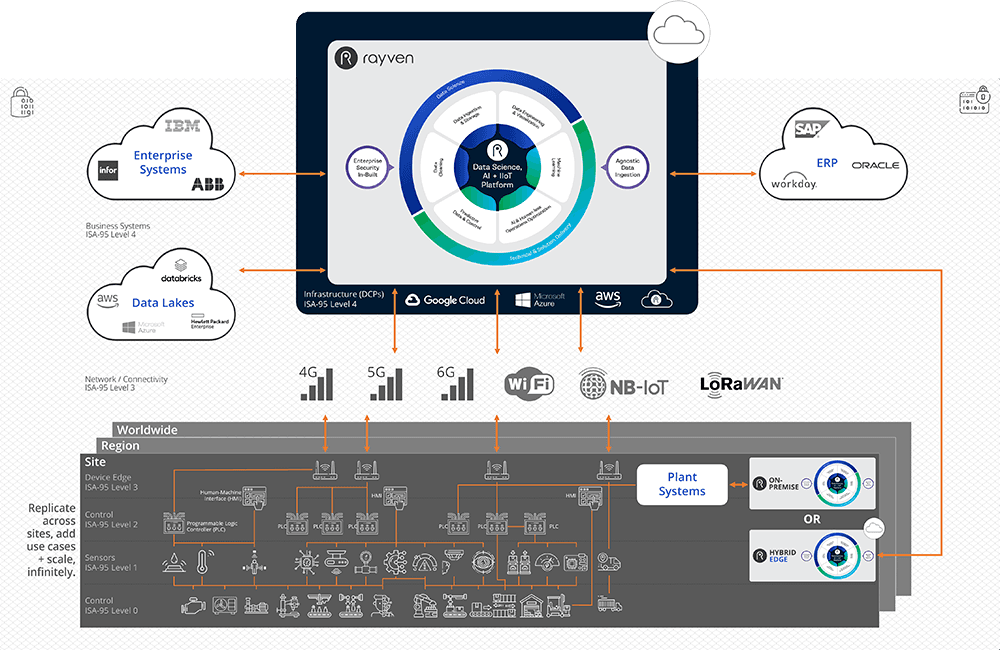
Governance + Controls provides the policy + constraint layer that governs how all other platform capabilities operate.
-
Data Layer: retention policies + deduplication controls govern what data is stored, for how long + how it is managed.
-
Execution Layer: rate limits, quotas + idempotency controls govern workflow behaviour. AI governance controls constrain agent action within defined boundaries.
-
Integration Layer: rate limits on API endpoints + ingestion nodes prevent unintended system load.
-
Security Layer: compliance configuration, environment isolation + promotion controls ensure changes follow a governed release process.
USE CASES
How Governance + Controls gets used.
Regulated operator configuring data retention for compliance obligations
A utilities operator configures per-node data retention policies - operational telemetry retained for 90 days, compliance event logs for seven years. Policies are configured in the workflow builder without database administration. Automated expiry ensures data is deleted at the correct time without manual intervention.
Enterprise AI deployment with defined policy boundaries
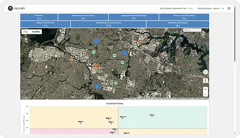
An enterprise deploys AI agents within Rayven for operational automation. Governance configuration defines exactly what actions each agent can take, which data it can access + what outputs it can produce. Prompt management + memory limits prevent agents from operating outside their defined scope.
Partner managing compliant multi-client deployments from a single instance
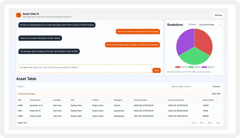
An MSP configures per-client governance settings within a shared instance. Data retention policies, rate limits + compliance configurations apply per Label assignment. Each client's governance requirements are met independently - without maintaining separate deployments per client.
Rayven Governance + Controls FAQs:
What governance controls does Rayven provide?
Rayven provides label-based data access control, field-level permissions, configurable data retention and deletion policies, approval workflows for sensitive actions, and detailed audit logging. See the Security Layer.
Can data access be restricted by record label or asset category?
Yes. Rayven's label-based access system lets you tag records, assets, and sites with labels, then restrict user or role access to specific label groups. Users only see data within their assigned labels. See Users, Roles + Access.
How does Rayven handle data residency requirements?
For managed cloud deployments, customers can select their preferred hosting region to ensure data remains within a specific jurisdiction. On-premises deployments provide full control over data location. See Deployment + Architecture.
Can field-level or column-level permissions be configured?
Yes. Administrators can restrict visibility of specific fields within a data table on a per-role basis. Sensitive columns such as personal identifiers or financial values can be hidden from roles that do not require them. See Users, Roles + Access.
How are user provisioning and de-provisioning handled?
Users can be provisioned manually within Rayven or via SSO-linked directory synchronisation. De-provisioning immediately revokes all access. Role and label assignments are cleared and recorded in the audit trail. See Users, Roles + Access.
Does Rayven support data retention and deletion policies?
Yes. Retention policies can be set per data table, specifying how long records are kept before automatic archival or deletion. Manual deletion tools are available for subject access and right-to-erasure requests under privacy legislation. See Data Management.
Can workflows and automation rules be locked to prevent unauthorised changes?
Yes. Workflow configurations can be restricted to specific roles, preventing operational users from modifying automation logic. Changes to locked workflows require elevated permissions and are recorded in the audit trail. See Audit Trails + Logs.
Is there approval workflow support for configuration changes?
Yes. Rayven's approval modules can be applied to configuration change requests, requiring a second authorised user to review and confirm before a change takes effect. See Approvals + Exceptions.
How does Rayven support privacy legislation compliance?
Rayven provides the technical controls needed to support compliance - retention policies, right-to-erasure deletion tools, data residency selection, audit logging, and subject access request exports. Configuration of specific controls is the responsibility of the data controller. See Enterprise Security.
Can governance reports be scheduled and exported?
Yes. Governance-related reports - such as user access reviews, audit log summaries, and data retention status - can be scheduled and delivered by email or exported on demand. See Dynamic Reports.
Also in Security, Governance + Hosting:
White Labelling
Custom domain, branding, colour palette + multi-tenant configuration for client-facing applications.
Deployment + Architecture
SaaS, private cloud, on-premise + Edge deployment options with identical functionality across all models.
Users, Roles + Access
Role-based access control, SSO, MFA + workspace-level permission management across all users.
Usage + Metrics
Real-time visibility of platform usage, workflow performance, data volumes + resource consumption.
Enterprise Security
Encryption at rest + in transit, network segmentation, secrets management + compliance-ready governance.
Hosting + Management
Managed cloud hosting on AWS + Azure, SLA-backed uptime, automated backups + disaster recovery across all deployment types.
Audit Trails + Logs
Complete, immutable records of every user action, data change + workflow execution across the platform.
Want to discuss your hosting requirements?
Tell us where your data needs to live and we will walk you through the right deployment option for your environment.
Join the Shift
Discover the easy way to do something new.
Book a free 30 minute assessment with our team and we'll scope your project, needs + what a solution might look like.